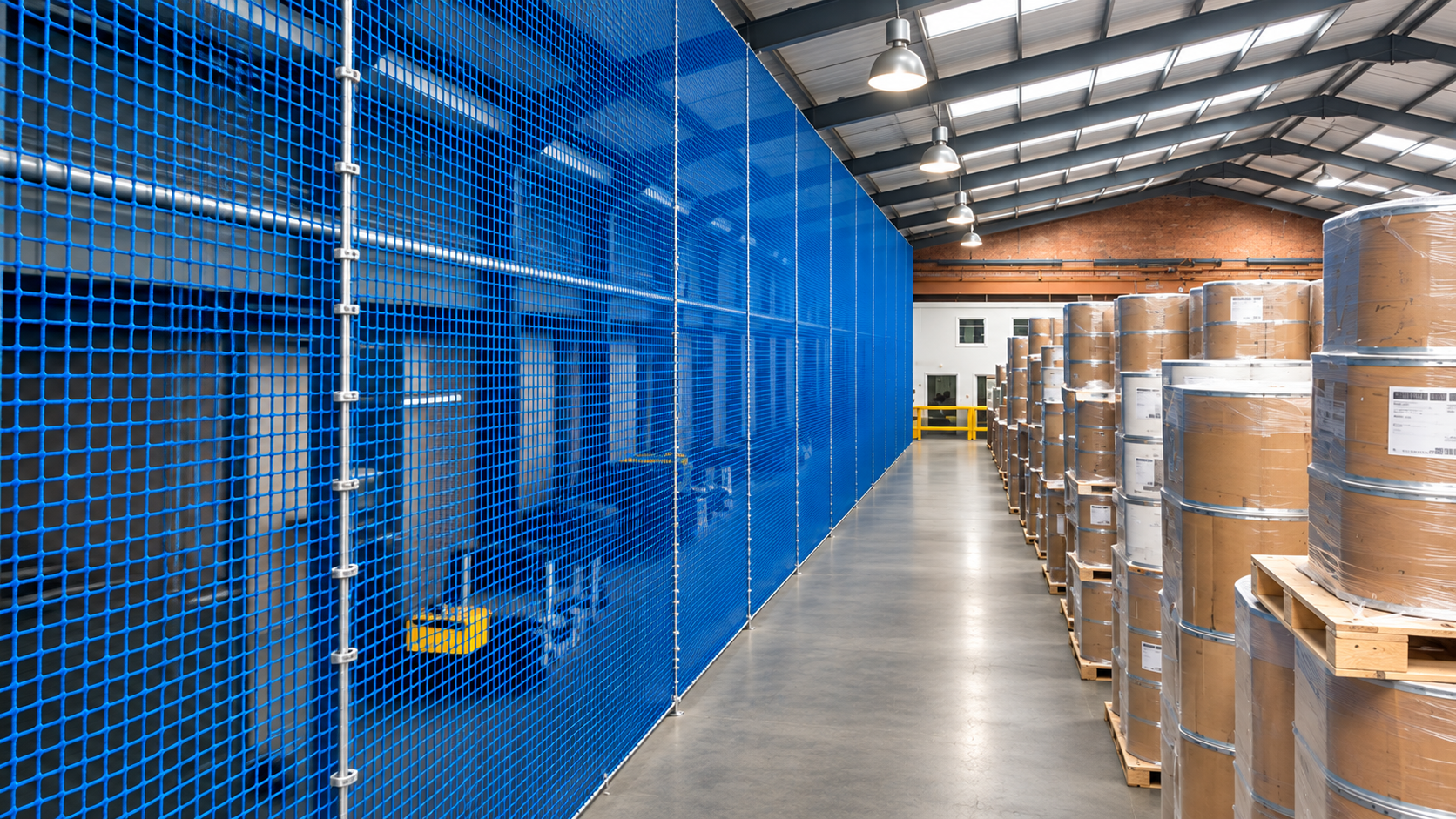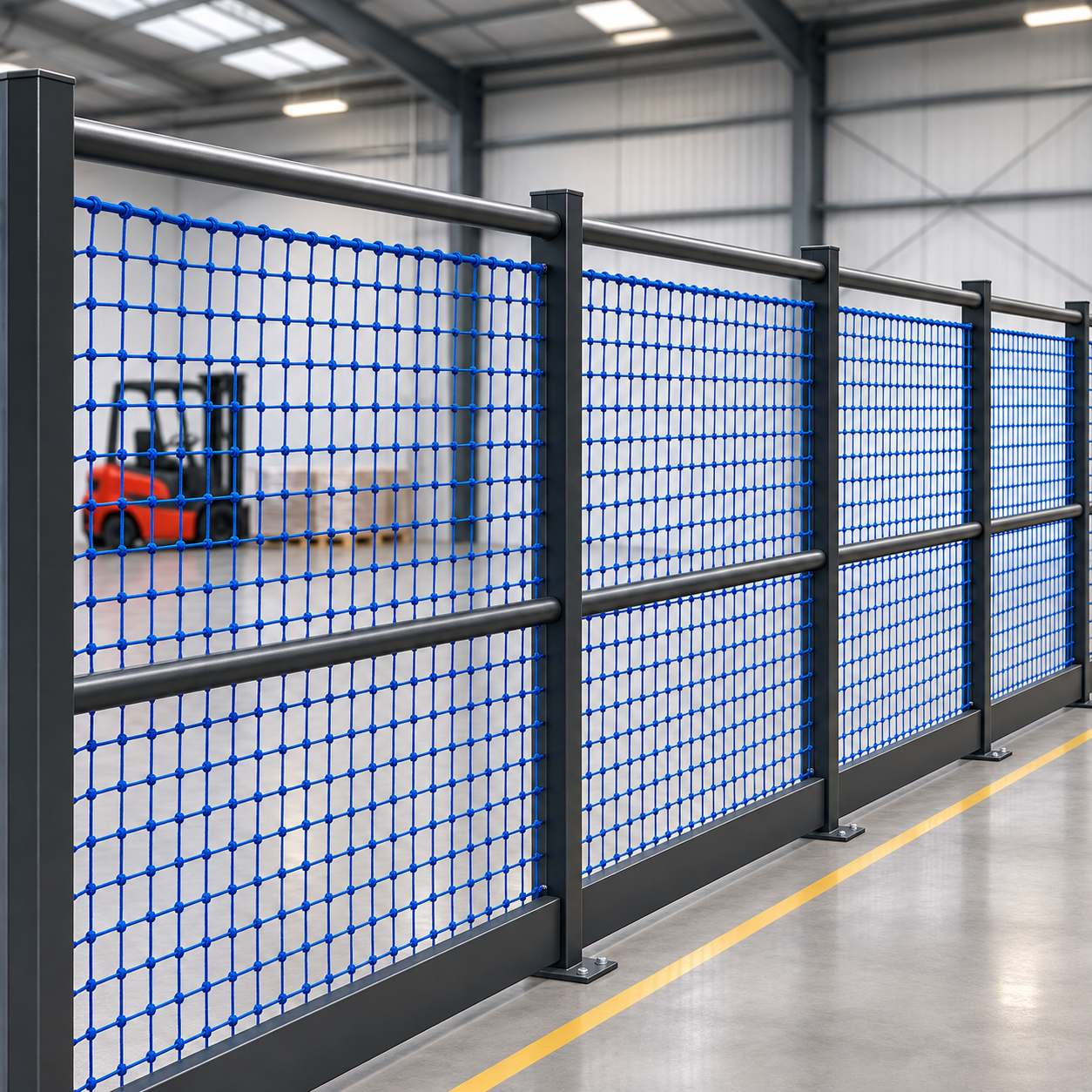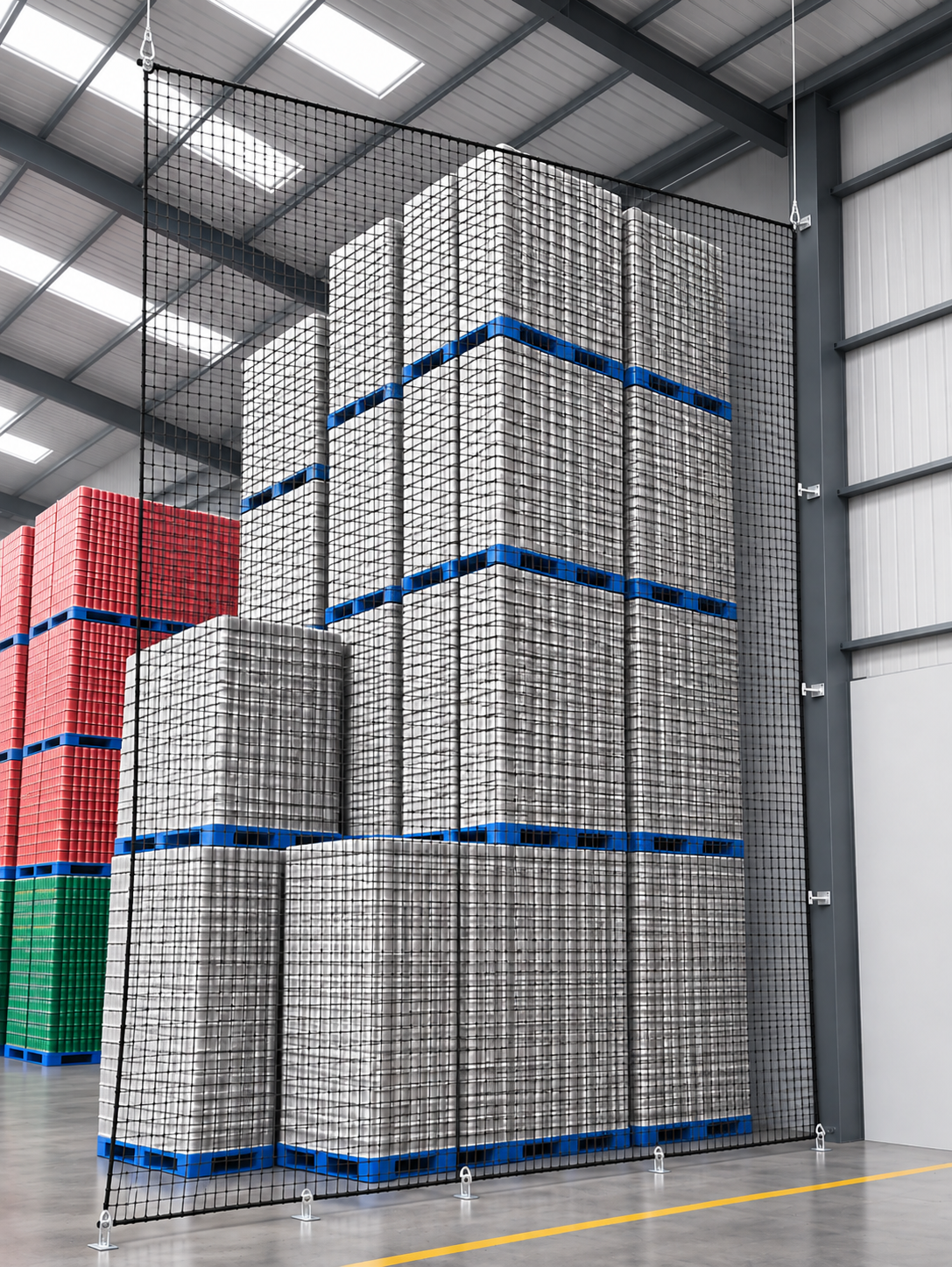
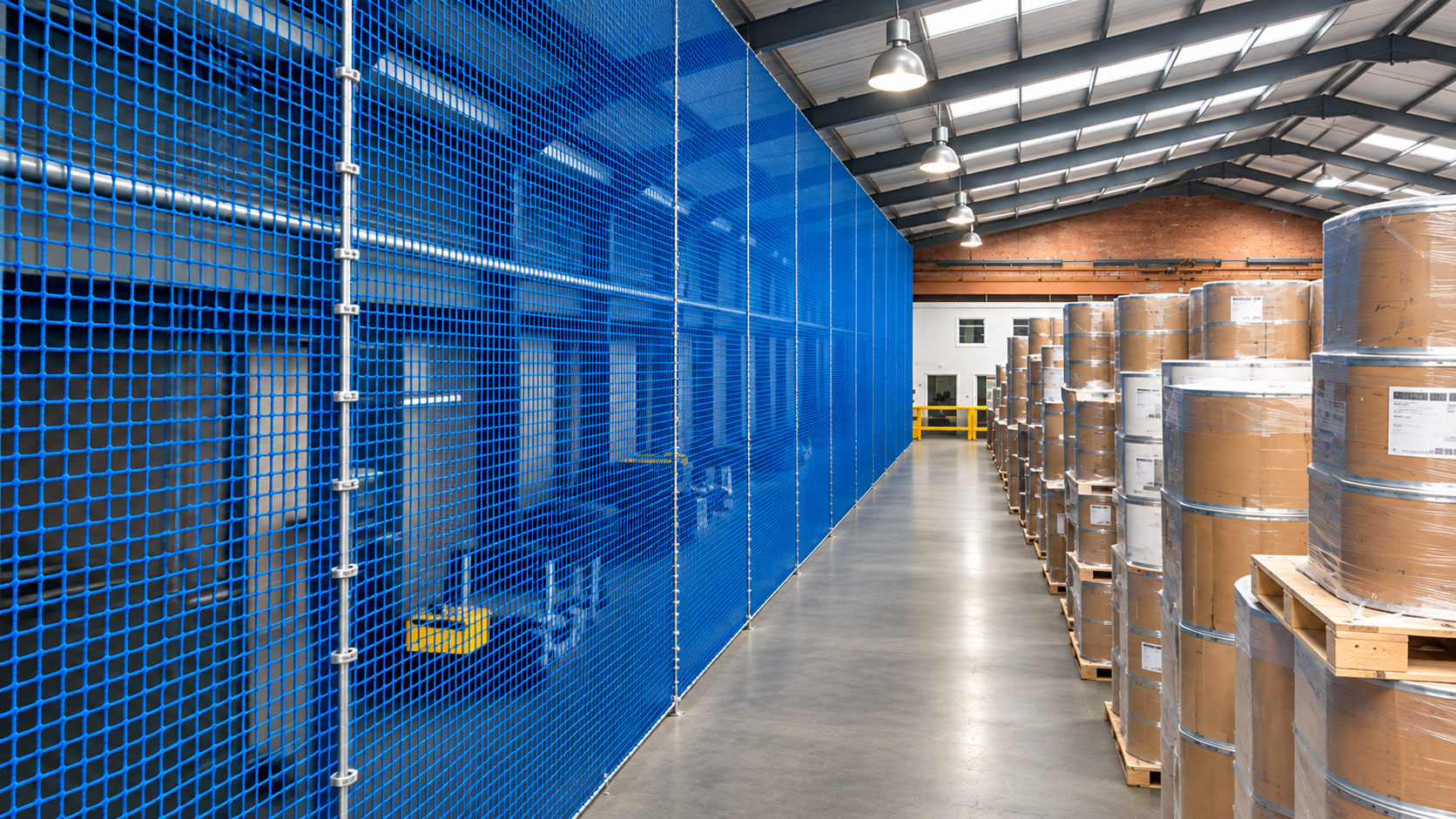
Warehouse safety netting installed behind pallet racking for goods containment

Supply & Installation

Warehouse Safety Netting

Different Loads Require Different Levels of Protection

Safety netting is one of the most flexible containment solutions available for warehouse storage — but its flexibility is exactly why choosing the right system matters. Netting installed for one purpose, or rated for one type of load, cannot simply be assumed to protect against another.

At True Space Solutions, we supply and install warehouse safety netting systems matched to the loads being stored — from lightweight falling-product containment to heavy-duty pallet containment and specialist engineered systems.

And because we're racking specialists first, we make sure the netting we recommend has the appropriate, verified containment capability for your application — so the protection you buy is the protection you actually need.

Request a Quote

Not All Safety Netting Is Created Equal

Warehouse netting varies enormously in strength, construction and containment capability. Understanding the difference is the first step in specifying correctly.

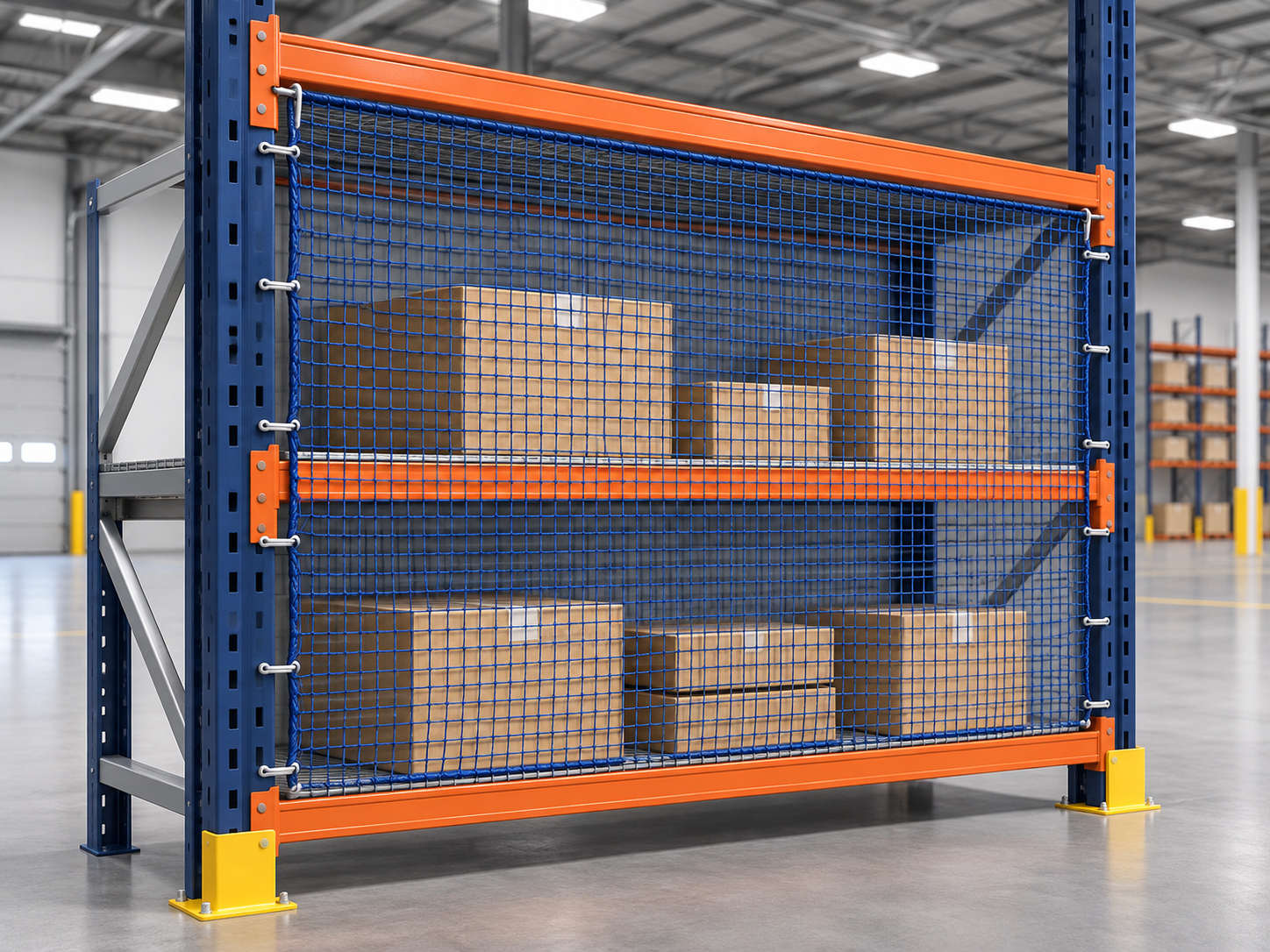
Lightweight safety netting containing small cartons on warehouse shelving

Lightweight Product Containment

Lightweight netting systems are designed to contain individual cartons, loose goods and other lightweight products that could fall from shelving or racking. They provide an economical containment solution for suitable applications — but their containment capability is limited to the loads they were designed and verified for.
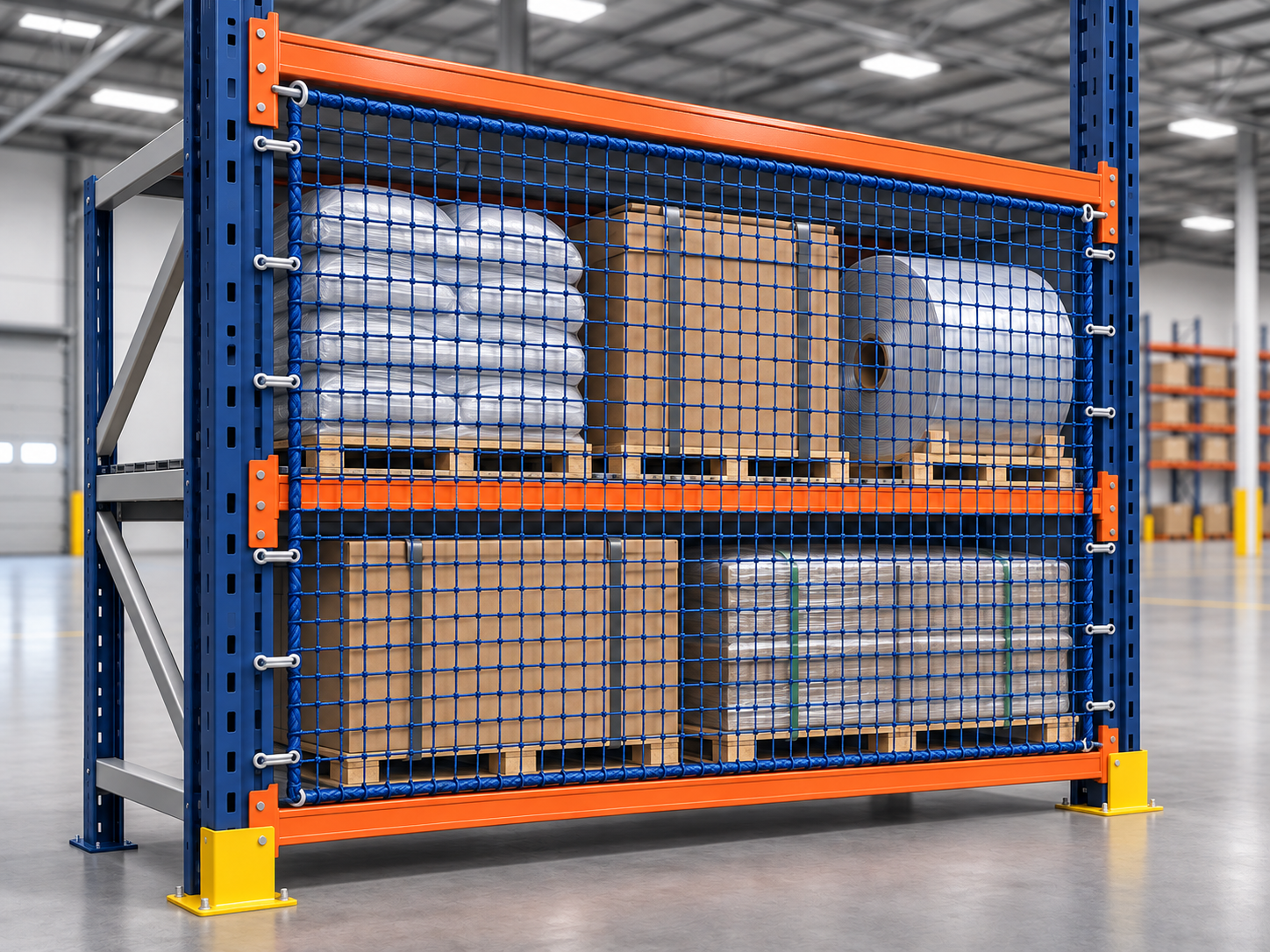
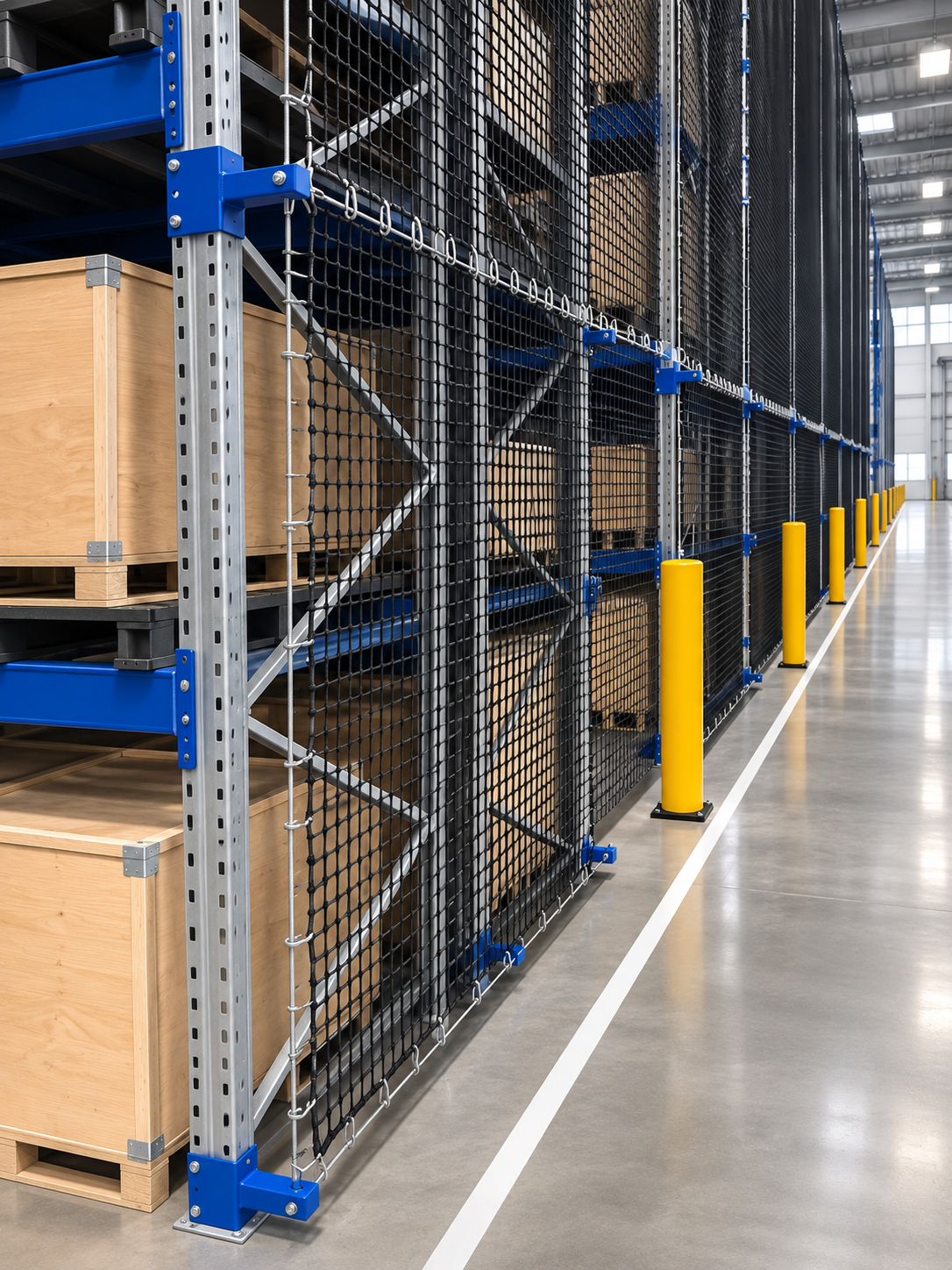
Heavy-duty safety netting system on warehouse pallet racking

Heavy-Duty Pallet Containment

Heavy-duty netting systems use stronger mesh materials, more substantial cables and more robust fixings to provide containment for heavier stored goods. Where palletised or substantial loads present a containment risk, heavy-duty systems with verified load capability are required.

Specialist safety netting configuration in warehouse storage

Specialist Systems

Some applications need more than a standard system — unusual racking layouts, specific load profiles, or environments requiring bespoke netting configurations. Specialist systems are designed around the actual loads, geometry and risks of the individual installation.

The critical question is never simply 'is netting fitted?' — it's whether the netting fitted has the verified strength and containment capability for the loads behind it.

Safety netting with cable and bracket fixings installed on warehouse racking

How Safety Netting Works

Warehouse safety netting is a flexible textile system, typically made from high-strength polymer or similar materials, stretched across the rear or sides of racking to contain stored goods.

The netting itself is only part of the system. Support cables carry the loads that the netting catches, transferring them to the racking or supporting structure. Fixings — brackets, anchors and tensioning hardware — hold the whole arrangement securely in place.

This is why containment capability depends on the complete system, not just the mesh: the netting material, the cable specification, the fixing arrangements and the structure they connect to must all be up to the job. A strong net on weak fixings isn't a containment system — it's a false sense of security.

When loads are contained, the energy is absorbed through the deflection of the net and transferred through the cables into the supporting structure. That load path must be capable of carrying it — which is why correct specification and installation are inseparable from the product itself.

Where Safety Netting Can Be Used

Flexible netting suits a wide range of warehouse applications — wherever stored goods could fall towards people, products or working areas.

Netting protecting a warehouse pedestrian walkway beside racking

Pedestrian Walkways

Where pedestrians work or travel alongside racking, netting on the rear or side of the racking helps contain falling goods before they reach the walkway.

Safety netting in a warehouse picking area with cartons on shelves

Picking Areas

In picking areas, netting behind shelving and racking helps contain cartons and loose items, protecting pickers working at and below the storage levels.

Netting fitted to storage bays in warehouse racking

Storage Bays

Storage bays holding cartons, shrink-wrapped goods or loose items can be fitted with netting to keep stored products within the racking envelope.

Netting containment around warehouse loading area

Loading Areas

Around loading and unloading areas, netting can help contain goods during handling, protecting people and equipment working nearby.

Safety Netting vs Anti-Collapse Mesh

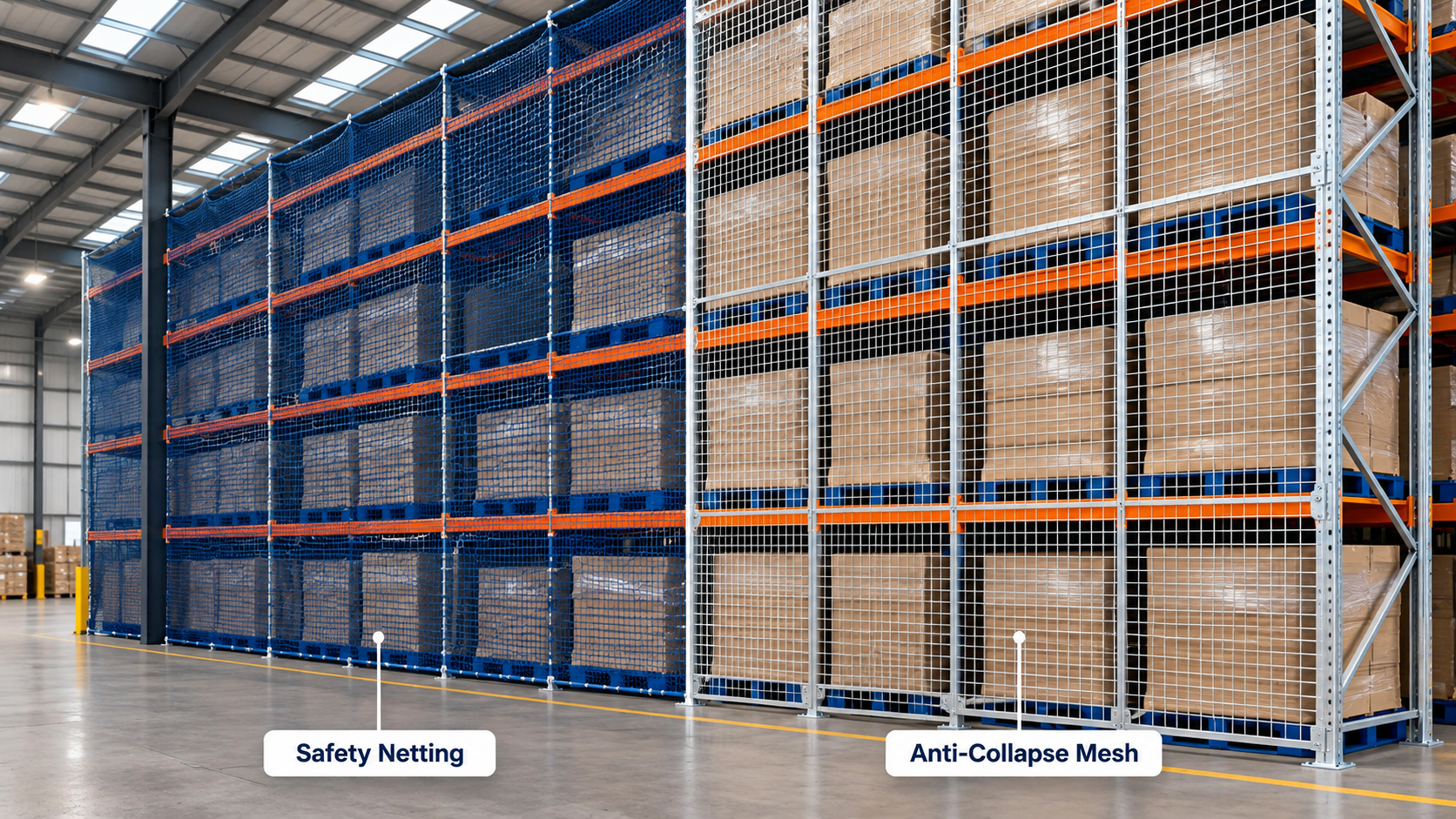
Netting and steel anti-collapse mesh solve related problems in different ways. Choosing between them depends on the application, the loads and the environment.

Safety Netting

  • Flexible textile construction — absorbs and contains loads
  • Lightweight and economical for suitable applications
  • Containment capability varies from lightweight to heavy-duty systems
  • Requires correct cable and fixing specification to perform

Anti-Collapse Mesh

  • Rigid steel panels — physically contain goods with a solid barrier
  • Robust containment for heavier, more demanding applications
  • Also used for perimeter guarding and access restriction
  • Higher cost, permanent fixed installation
Flexible safety netting stretched across warehouse racking

Both products have their place — and in some warehouses, both are used in different areas. The right choice depends on the loads, the risks and the application.

Explore Anti-Collapse Mesh

HSG76 and SEMA Guidance

Independent guidance is clear that containment measures must be appropriate to the risks and the loads involved.

HSE's warehouse storage guidance, HSG76, treats falling objects as a significant warehouse hazard and advocates a risk-based approach: identify where goods or materials could fall and cause harm, and put suitable controls in place. Containment measures — including netting — should be selected to match the risk identified.

Guidance associated with SEMA and the storage equipment sector supports the selection of containment systems that are appropriate to the racking system, the stored loads and the identified risks. Manufacturer specifications and verified performance data should inform the selection — not assumptions about what a system can contain.

We stay up to date with current guidance and can help you understand what it means for your installation. Where relevant, we recommend discussing your requirements with your racking inspector as part of a professional racking inspection.

Correct Specification Matters

Getting netting right means understanding the loads, the structure and the way the warehouse operates. Before recommending a system, we consider:

Pallet weight and load profile

The weight and nature of the stored loads — because containment capability must match what the netting will actually have to hold.

Impact exposure

Whether the netting could be struck by forklifts or other equipment, and what that means for the system selected.

Fixing arrangements

How cables and fixings are anchored, and whether the supporting structure can carry the containment loads.

Netting strength

The netting's strength and containment performance — verified against manufacturer data, not assumed from appearance.

Racking configuration

The height and configuration of the racking, and how netting integrates with the existing structure.

Operating environment

Environmental conditions — temperature, humidity and product type — that affect netting material selection.

The result is netting specified for the loads you actually store — not a one-size-fits-all guess.

Why True Space Solutions?

We don't just hang netting. Technical knowledge and inspection experience shape everything we recommend.

Inspection Experience

Our racking inspection work means we see where falling goods cause real problems — and we understand the loads and risks behind them.

Technical Knowledge

We understand containment capability, load paths and fixing requirements — and we'll specify netting with verified performance for your application.

Honest Advice

We're honest about what netting can and can't do — and where steel mesh or another solution is the better answer.

Complete Service

From initial advice through supply and installation, we handle the whole process so your netting is fitted correctly and ready to rely on.

Frequently Asked Questions

Specify the Right Netting with True Space Solutions

Whether you need lightweight containment for a picking area or a heavy-duty system for palletised loads, we're here to help with straightforward advice and netting specified for your actual requirements.

We work with businesses throughout Northamptonshire, the Midlands and surrounding areas.

Service you expect. People you trust.